
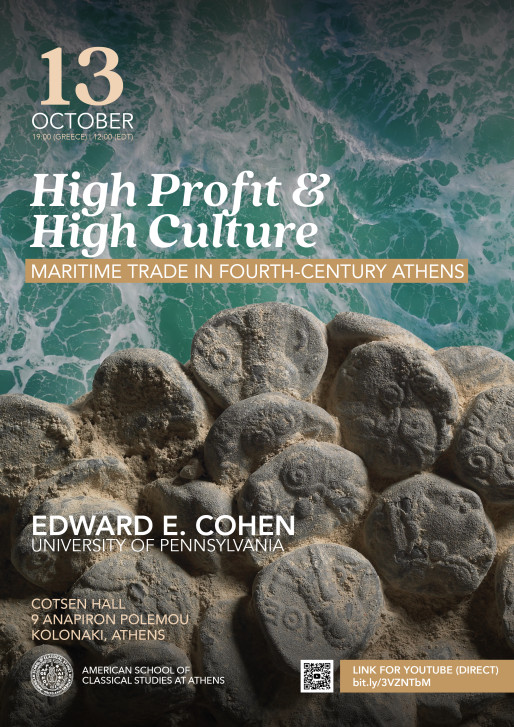
Athens not only pioneered many forms of high culture ––– artistry, tragedy, philosophy etc. etc. –– but within these novel genres it produced works that have never been surpassed. Yet, Athens was also a pioneer in financial and economic genres, inventing the private bank (trapeza), maritime courts (dikai emporikai), and sophisticated forms of credit (think intermediation and letters of credit!). It should be no surprise that in economic innovation, as in its cultural creations, the Athenians were not only originators but also practitioners at levels never surpassed, dominating the commercial life of the Eastern Mediterranean with skill and capability –– for example, playing a major role in development of the world’s first system of international law, a sea code whose essential principles continue to the present day.
My presentation will focus on how the Athenians developed systems that reified the huge potential profitability, and avoided the ruinous potential losses inherent in Mediterranean maritime commerce. Creditors did not receive mere interest on monies loaned: they effectively shared in the profits of the enterprise. In turn, the sea risk was allocated to the lender, and the borrower enjoyed special protection.
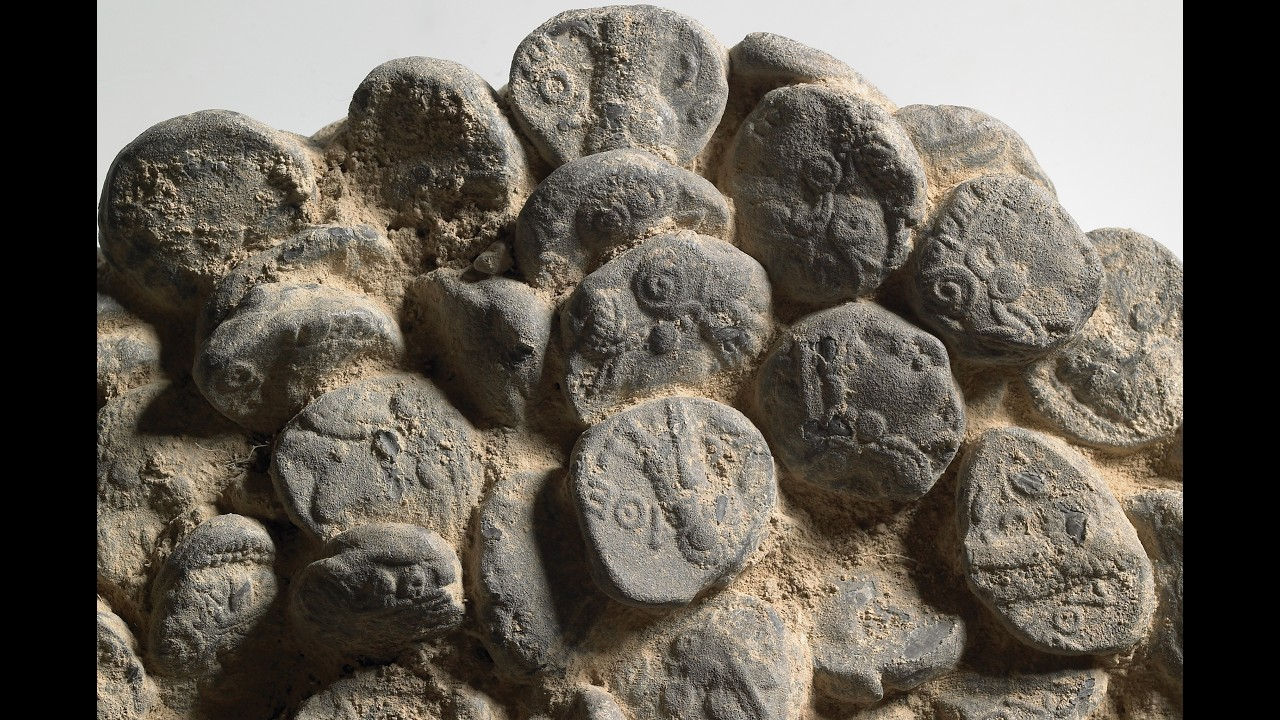
In Aristotle's words, a “monied mode of acquisition” had arisen by the fourth century from the new dominance of economic activity by persons pursuing financial gain (“making money from one another”), who converted every aspect of life into monetary considerations. This individualistic pursuit of profit (kerdos) reflected society’s new functioning through the exchange of goods and services for money, a process superseding the prior system of household production/consumption supplemented by barter based on social and political relations. Ancient evidence shows that Athens was an “extraordinarily profitable” (kerdaleôtatê) place in which to conduct commerce: because of the universal acceptance of Athenian silver coinage, for example, a trader delivering goods to Peiraeus could always, if he wished, sell elsewhere for more than his original cost the Athenian coins he received in payment.
It is this newly monetized and credit-enriched economy that is the subject of my presentation.
About the speaker:
Edward E. Cohen is a historian specializing in the economy and society of Classical Athens. In addition to scores of articles on aspects of Athenian history, and a recent book on Roman Inequality (OUP, 2023), he is the author of a number of monographs on the Athenian economy, including Ancient Athenian Maritime Courts; Athenian Economy and Society: A Banking Perspective; The Athenian Nation and Athenian Prostitution: The Business of Sex. He is presently preparing for publication Globalism in Classical Antiquity: Maritime Commerce, Monetary Imperialism and The Birth of International Law.
Since 1995, he has been Professor of Classics and Ancient History (Adjunct) at the University of Pennsylvania.
Mr. Cohen is presently an Overseer of the Gennadeios Library and a Trustee Emeritus of the American School. He was a Regular Member of the School in 1961-62. In 2016, in recognition of his contributions to Greek culture, he was awarded an Honorary Doctorate in Economics by the Panteios University of Athens.

Εγγραφείτε στο εβδομαδιαίο ενημερωτικό δελτίο της υπηρεσίας ΔΙΑΥΛΟΣ και θα λαμβάνετε μέσω email την λίστα των προγραμματισμένων για την αμέσως επόμενη εβδομάδα μεταδόσεων